
Welcome! I’m Salil Malhotra
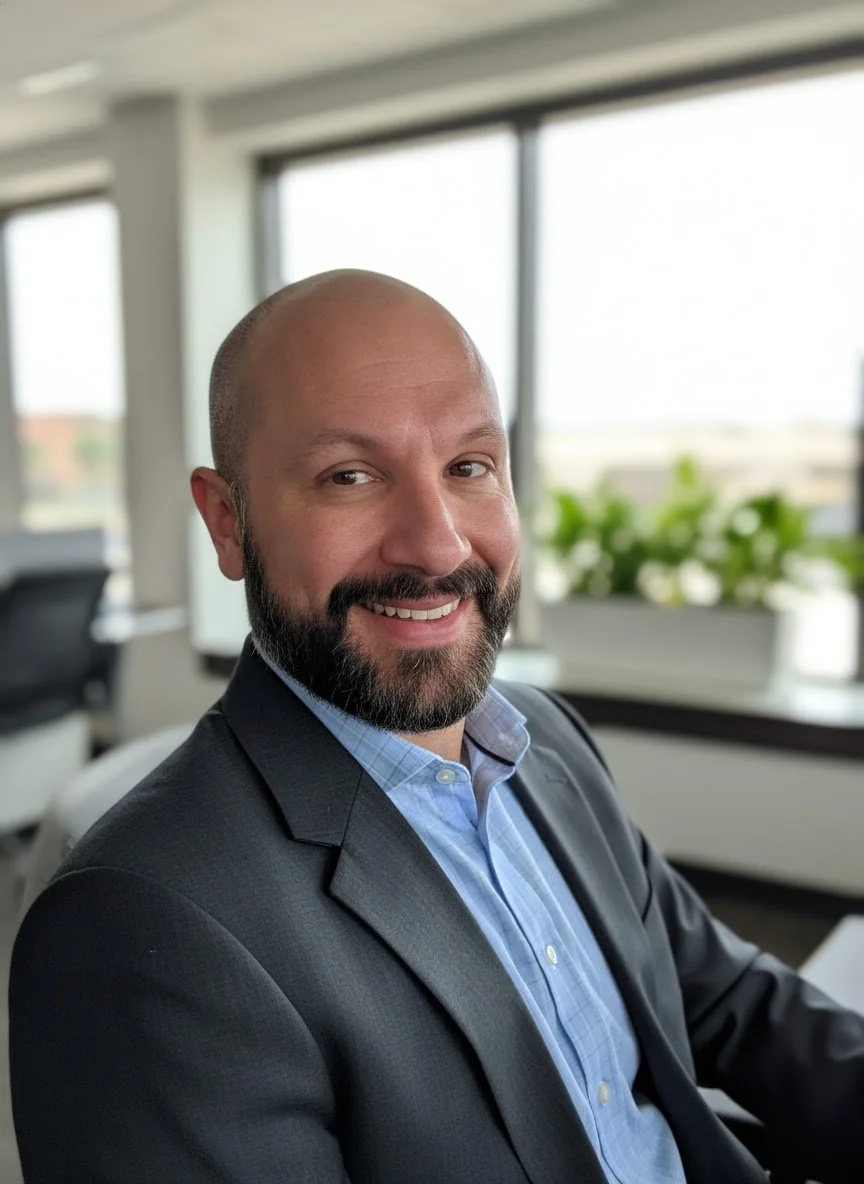
My path to integrative psychiatry did not follow a straight line. It followed the patients.
I began my clinical career as a Doctor of Chiropractic, immersed in the language of the nervous system, biomechanics, and the body's remarkable capacity to heal without a prescription. During those early years, my fellowship in medical acupuncture opened up a whole new dimension of that picture. Learning electroacupuncture, I discovered I could show a patient a visual map of their energetic imbalances in real time, translating something traditionally esoteric into a clear, objective graph they could look at and understand. Think of the body as having twelve basic energy channels, each one a little like a radio station. When one goes out of tune, it often correlates directly with what the patient is experiencing emotionally and physically. Acupuncture retunes it. That framework changed how I saw everything.
But as much as I valued the tools of physical medicine, I kept running into the same wall. Patients would come in with chronic pain, and it was clear something else was driving their suffering. Something the chiropractic table or the needles could touch but not fully resolve. So I went back to school, earned my certification as a Family Nurse Practitioner, and stepped into primary care. Managing complex chronic conditions, ordering functional labs, investigating thyroid dysregulation and inflammatory markers and nutritional deficiencies: that expanded the toolkit considerably. But primary care revealed an even larger gap.
My Story

I watched patients cycle through the system, their physical and mental health treated as entirely separate problems handled by entirely separate providers. Chronic fatigue written off. GI distress medicated. Anxiety handed a prescription and a referral. Nobody was looking at the whole picture. Nobody was trained to.
That changed when a patient sat across from me during my primary care years. She had been through the system for months. Specialists had run every test and told her everything looked normal. She was exhausted, not just from the pain but from trying to explain it to people who kept looking at one piece of her at a time. Instead of opening her chart, I put it down and listened. As she talked, the picture became clear: her physical symptoms were her body's way of expressing years of unaddressed emotional suffering. The two had never been connected. At that moment I understood what kind of provider I needed to become.
I went back to school for psychiatric-mental health because of her, and patients just like her.
Today I practice in Northern Virginia, where I have built a deliberately unhurried, deeply individualized practice that draws on everything in my background. Two patients can walk in with the exact same diagnosis and, after a thorough whole-person evaluation, end up on two entirely different and entirely appropriate paths. One might need a medication adjustment and regular monitoring, and that is perfectly valid care. Another might benefit from an electroacupuncture scan, targeted supplementation, and changes to sleep and movement. Neither path is wrong. The goal is always to understand the individual, not slot them into a protocol. You deserve nothing less than that.
Outside the office, the center of my world is my two children, my son and my daughter. Watching them grow is the best part of any week. I decompress by playing the cello, which has been a grounding ritual for as long as I can remember, and by cooking for the people I care about, which is really just another form of experimentation I enjoy. I am also an unapologetic devotee of Star Trek and Lord of the Rings. Two universes built on exploration, deep loyalty, and the belief that the journey itself has meaning. Those themes are not entirely unrelated to the work I do every day.
I grew up in New Jersey as the child of Punjabi immigrants. My parents raised me with a deep sense of what honest effort looks like, and that work ethic has been the through-line of my entire life. Relocating to Virginia alone, without a network or a safety net, taught me what independence actually requires. Living through a divorce and significant financial hardship taught me the rest. Those experiences did not just soften my empathy; they sharpened it. I know firsthand what it feels like to be in the middle of something that seems like it might not be survivable, and to find, on the other side, that it was. I carry that history into every room.
One thing patients hear me say often is this: be gentle with yourself along the journey. I mean it every time.
If you are looking for a provider who will take the time to actually understand you, who welcomes your questions and your research and your skepticism, and who will meet you exactly where you are without judgment, I would be glad to be in your corner.
Be gentle with yourself along the journey.
DC: Doctor of Chiropractic
FNP-C: Certified Family Nurse Practitioner
PMHNP: Psychiatric Mental Health Nurse Practitioner
FIAMA: Fellow, International Academy of Medical Acupuncture